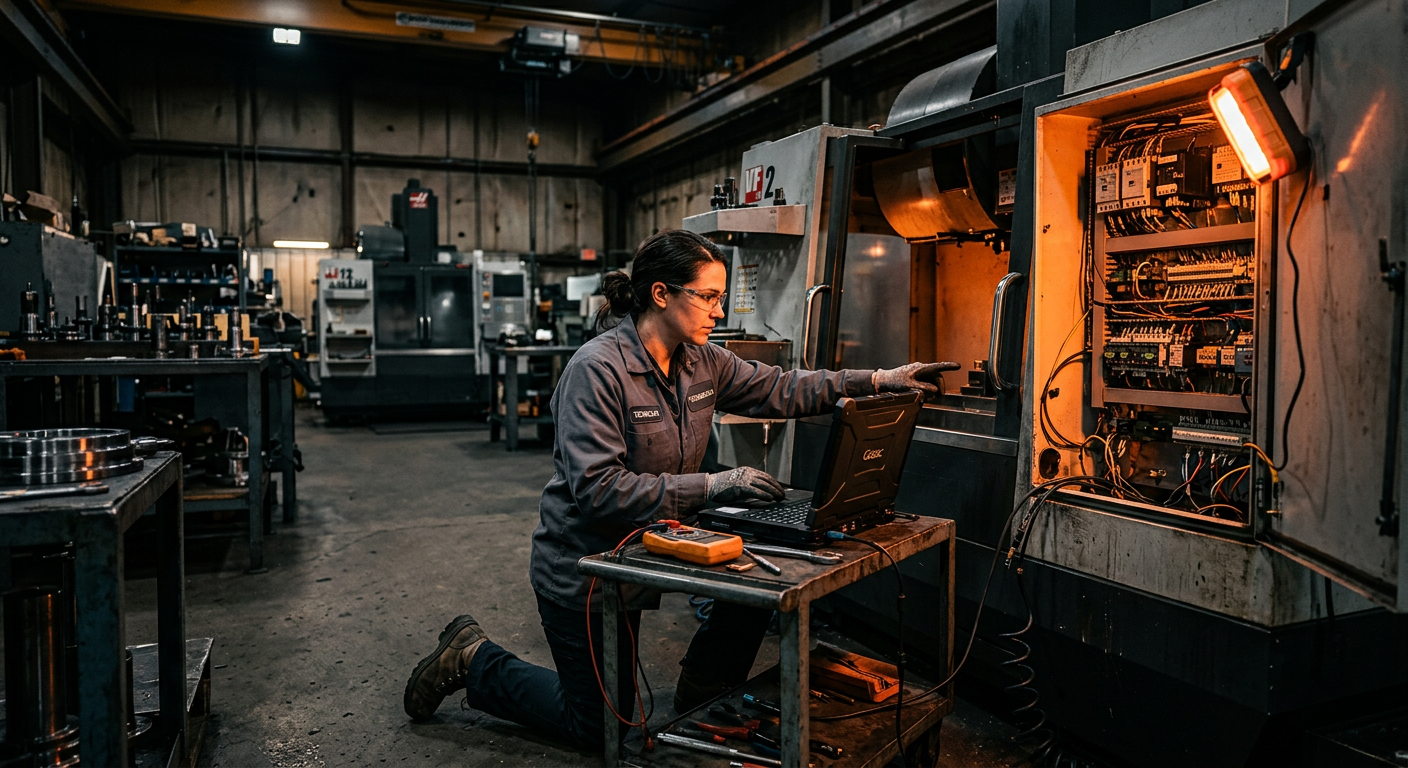
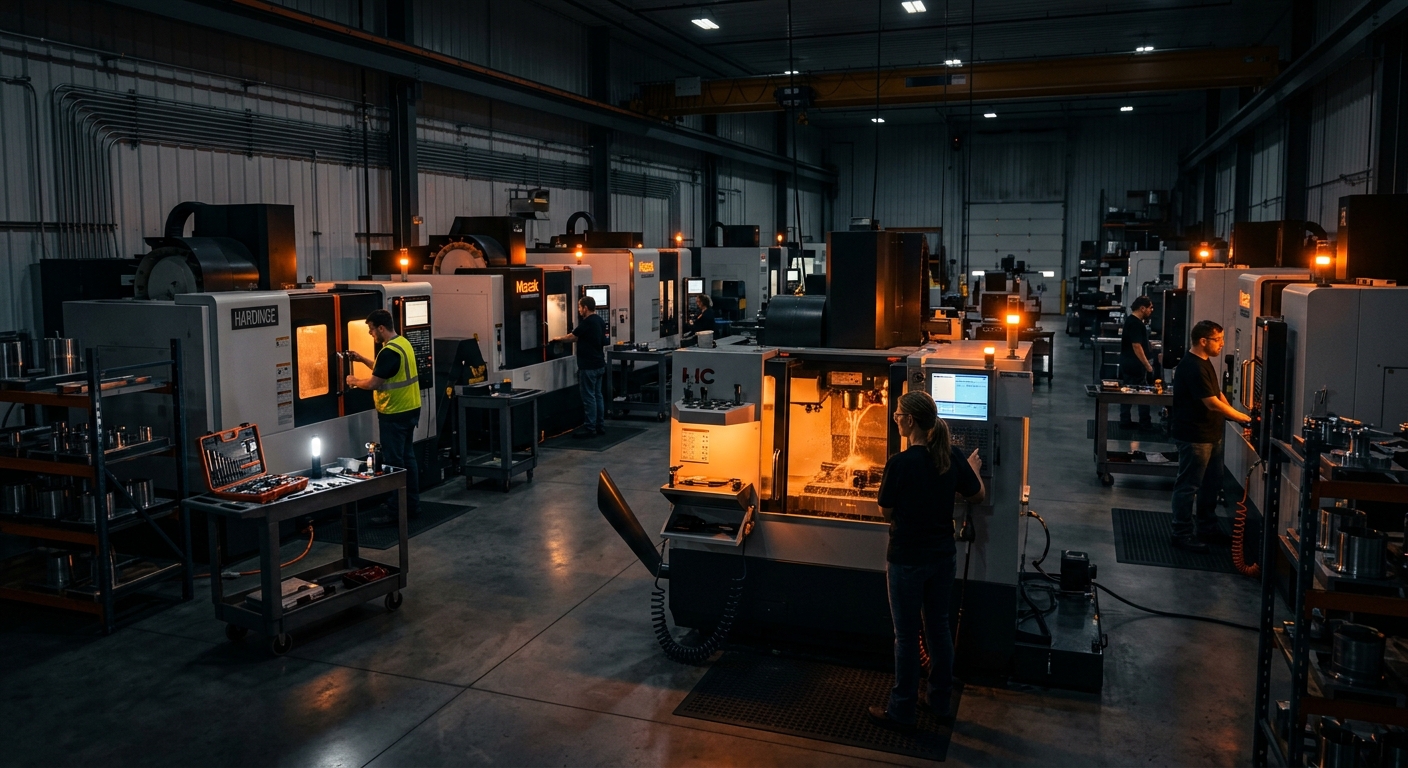
Your machine goes down at 11 PM on a Tuesday. There's a job due Thursday. You've never called an emergency CNC service before, and you're not sure what happens next.
This post walks you through exactly what to expect when you call Maz CNC for 24/7 emergency CNC repair — from the moment you dial to the moment your machine is back in cut. No surprises.
Emergency CNC repair in New England: When you call Maz CNC, a live technician answers 24/7, gathers diagnostic information immediately, dispatches with parts on the truck, and provides a written estimate before any work begins. Most emergency calls in southern NH, MA, RI, and CT receive same-day or next-morning response.
Step-by-Step: What Happens When You Call for Emergency CNC Repair
You reach a live technician — not voicemail
Our emergency line is answered 24/7 by someone who knows CNC machines. You're not leaving a message that gets triaged in the morning. When you call, you talk to a technician who can start gathering information and moving toward a solution immediately.
We ask the right questions
The technician on the phone isn't there to upsell you — they're trying to form an early hypothesis on what failed. Be ready to describe: what the machine was doing when it went down, what alarms are showing, what changed recently (new tooling, new program, shift in material, anything). The more specific you can be, the better our initial read.
We confirm dispatch and give you an ETA
Depending on your location in New England and the time of the call, we'll confirm a technician dispatch and give you a realistic arrival window. For most of southern NH, MA, RI, and CT, we're targeting same-day or next-morning for emergency calls.
We bring parts — not just tools
Emergency vans are stocked with common drives, boards, fuses, cables, bearings, and consumables. We're not showing up empty-handed hoping to diagnose and return tomorrow. Many emergency repairs are completed in a single visit because the technician has what's needed on the truck.
On-site diagnosis, documented in writing
The technician diagnoses the failure, documents what they found, and gives you a clear explanation of what happened and what it takes to fix it. You get a quote before any repair work starts. No surprises on the invoice.
Repair, test cuts, sign-off
We don't leave until the machine is running and verified. Post-repair we run test cycles and confirm the machine is back to operating specification. You sign off when you're satisfied — not before.
How to Minimize Downtime Before Emergency CNC Repair Arrives
There are things you can do in the window between calling us and our arrival that reduce total downtime. Here's what helps:
Do this immediately:
- Write down all active alarms. Photograph the screen if you can. Alarms that clear on power cycle can disappear before the technician arrives, but they're still diagnostic gold.
- Note the sequence of events. What was the machine doing? What happened first? Did anything look or sound different before the fault? The more details you capture while they're fresh, the faster diagnosis goes.
- Don't keep cycling power. Repeated power cycles on an electrical fault can mask the failure or, in some cases, cause additional damage. If the alarm comes back every time, stop cycling and wait for the technician.
- Secure the workpiece. If there's a part in the machine, make sure it's stable and accounted for before the technician works in the enclosure.
Have this information ready when we arrive:
- Machine make, model, and control type (Fanuc, Siemens, Mitsubishi, etc.)
- Machine serial number (usually on a plate inside the enclosure or on the back of the machine)
- Any recent maintenance or repairs performed
- History of this fault, if it's recurring
- Contact for your facility's maintenance or engineering lead if the technician has questions
Common Reasons Emergency CNC Repairs Take Longer Than Expected
We're transparent about this because it helps set realistic expectations:
- Parts not on the truck. We stock common items, but some failures require specific OEM parts that need to be ordered. If a part ships from overseas, lead time can stretch. We'll tell you this up front and explore alternatives (repair of the failed part, temporary workaround) where possible.
- Cascading failures. Sometimes a secondary component has been running stressed because the primary failure went undetected for a while. You call for a drive fault and discover the motor also needs replacement. These are not surprises we manufacture — they're real failure chains that happen in stressed equipment.
- Access challenges. Some components require significant disassembly to reach. A spindle on a horizontal machining center may require removing the ATC and headstock panels before the technician can even see the spindle. That access time is real, and we'll be upfront about it in the quote.
- Software or parameter issues. Some control failures involve corrupted parameters or firmware problems. Recovery can take time, especially on older controls where backups weren't maintained. This is why we emphasize parameter backups as part of preventive maintenance.
Emergency CNC Repair Response Times by Region
Our service area covers all of New England. Here's a realistic picture of typical emergency response times:
- Southern NH (Manchester, Nashua, Concord area): Often same-shift for evening and overnight calls. We're based in New Ipswich — this is our home territory.
- Greater Boston and North Shore: Same-day for most calls; next-morning for late-night emergencies depending on technician availability.
- Worcester and Central MA: Same-day to next-morning.
- Providence RI: Same-day to next-morning.
- Hartford CT and Lowell MA: Next-morning in most cases.
- Portsmouth NH and coastal areas: Same-day in most cases.
Response times vary based on current call volume, technician location, and time of call. We'll give you an honest estimate when you call — not an optimistic one.
After the Emergency: Preventing the Next CNC Breakdown
Once you're back in production, the emergency isn't really over. The failure that took you down has something to tell you. After an emergency repair, we recommend:
- Review what failed and why — was this wear, neglect, environmental, or random failure?
- If wear-related: build a PM schedule that addresses the failure mode before the next occurrence
- Back up machine parameters if you haven't already
- Consider a preventive maintenance contract if this machine is critical to your production
- Identify and stock spare parts for the most likely future failures on this machine model
For a full step-by-step guide on what to do the moment your machine goes down, see CNC Machine Down? What To Do in an Emergency.
Need CNC Repair in New England?
Maz CNC provides fast, on-site CNC repair across Massachusetts, Connecticut, Rhode Island, New Hampshire, Vermont, and Maine. Available 24/7 for emergencies.
Get a Free Quote